From Farmers to Agripreneurs: How FarmPeace Is Driving a New Era of Entrepreneurial Agriculture
Agriculture is undergoing a fundamental shift as technology, data and changing consumer expectations reshape the way farming businesses operate. At the centre of this transformation is the need to move beyond viewing farmers solely as producers and recognise them as entrepreneurs managing complex businesses.
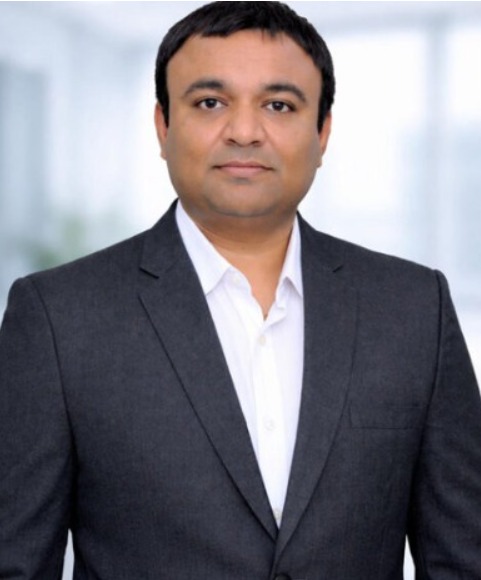
In an exclusive conversation, Sandip Patel, Managing Director, Farm Peace, shares his perspective on how FarmPeace is helping farmers adopt a more entrepreneurial and data-led approach to agriculture. From encouraging informed decision-making and improving market visibility to using farmer feedback to shape products, Patel discusses the importance of building commercially sustainable models that create measurable value for farmers.
He also explores the behavioural changes emerging among farmers, the role of technology in strengthening—not replacing—traditional farming expertise, and why the future of agribusiness will depend on creating an ecosystem where farmer success and business sustainability go hand in hand.
1. Agriculture is often viewed as a livelihood rather than a business. How is FarmPeace helping farmers think like entrepreneurs?
At FarmPeace, we believe the farmer should be viewed not just as a producer, but as an entrepreneur managing a business with real costs, risks, customers and growth opportunities. The shift begins with helping farmers make more informed decisions around what they grow, how they source inputs, how they manage resources and, most importantly, how they think about markets and profitability.
Our focus is on making agricultural decision-making more structured and data-led. When farmers have better visibility into demand, pricing, input costs and market opportunities, they can move from simply responding to circumstances to actively planning their businesses. Over time, this encourages a mindset of experimentation, efficiency and long-term value creation.
2. What behavioural changes have you observed among farmers after engaging with FarmPeace, and which has been the most rewarding?
One of the most encouraging changes has been the willingness to question traditional practices and make decisions based on information rather than assumptions. Farmers are increasingly looking at the economics behind a decision—whether a particular crop makes sense, whether an input is delivering value, or whether there is a better route to market.
We have also seen greater interest in planning and optimisation rather than taking decisions only at the point of need. For us, the most rewarding change is when farmers begin asking better questions. It shows that technology is not replacing their experience; it is helping them use that experience more effectively.
3. How do you strike a balance between farmer welfare and building a commercially sustainable agribusiness?
For us, farmer welfare and commercial sustainability are not competing objectives. In fact, a business model that creates lasting value for farmers is ultimately more sustainable.
The key is to build products and services that solve genuine problems and create measurable value. We therefore look at every initiative from two perspectives: Does it improve the farmer’s economics or decision-making? And can it be delivered through a model that is financially sustainable for the organisation?
We believe the strongest agribusinesses of the future will be those where farmer success and business success reinforce each other. If farmers benefit consistently, trust grows, adoption improves and the business becomes stronger in the process.
4. Has there been a moment when feedback from farmers fundamentally changed your strategy or product roadmap?
Farmer feedback has consistently shaped how we think about our products. Agriculture is an environment where assumptions made from an office can be very different from realities on the ground. Farmers deal with weather uncertainty, fluctuating prices, fragmented supply chains and highly localised challenges, so their feedback is essential to building something that actually works.
One of the important lessons for us has been that technology should adapt to the farmer’s workflow, rather than expecting the farmer to adapt to the technology. This has influenced our approach to product design, usability and the kind of information we prioritise.
We treat farmer conversations not simply as feedback, but as a continuous source of product intelligence. Many of our improvements have emerged from understanding what farmers actually need in their day-to-day decision-making.
5. What does success look like for FarmPeace beyond revenue and user acquisition?
For FarmPeace, success is ultimately about creating measurable improvement in the lives and businesses of farmers. User numbers are important, but they are only an indicator of reach. The more meaningful questions are whether farmers are making better decisions, improving productivity, reducing avoidable costs, accessing better opportunities and becoming more resilient to uncertainty.
We also measure success through trust and long-term engagement. If a farmer continues to use a solution because it genuinely helps them make better decisions, that is far more valuable than simply acquiring another user.
Our larger ambition is to contribute to a more efficient, informed and commercially resilient agricultural ecosystem—one where farmers have greater agency over their businesses and where technology becomes a practical tool for improving outcomes on the ground.